Tactical Coordination of Welcome Offers: Avoiding Overlaps While Capturing Maximum Incentives
Harper Wolf · Jul 12, 2026
Tactical Coordination of Welcome Offers: Avoiding Overlaps While Capturing Maximum Incentives
Operators in regulated markets continue to roll out welcome offers that include matched deposits, free bets, and bonus spins, yet each promotion carries its own set of eligibility rules and usage windows. Observers note that participants who map these rules before committing funds frequently extract higher combined value because they prevent simultaneous claims that trigger exclusion clauses. Data from industry reports indicates that overlapping restrictions often arise when sign-up periods coincide or when identity verification links multiple accounts to the same household.
Mapping Eligibility Windows and Geographic Limits
Each welcome offer specifies a registration timeframe, a deposit deadline, and a playthrough period that must be completed within a set number of days. Researchers at the University of Nevada Reno have documented that staggered application across different operators reduces the risk of simultaneous wagering requirements that exceed available bankrolls. Figures from the American Gaming Association show that jurisdictions in the United States enforce stricter address verification than some European markets, which means participants must confirm residency rules before initiating multiple registrations in July 2026.
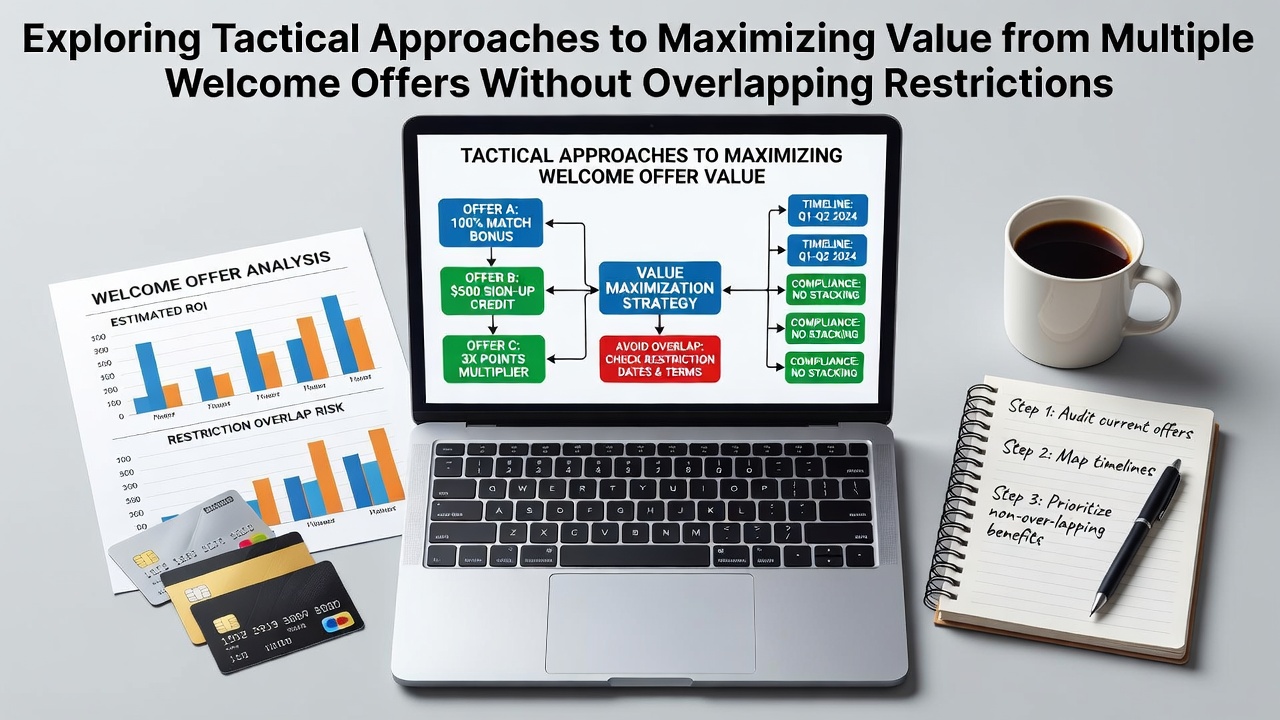
One documented approach involves listing every offer's start date, end date, and minimum deposit on a single timeline so that no two verification processes occur within the same calendar week. This method avoids automatic flagging when operators share data through common payment processors. Those who maintain such timelines report fewer rejected claims because the sequence respects each platform's cooling-off interval between promotions.
Sequencing Deposits and Verification Steps
Verification requirements typically include proof of identity, proof of address, and sometimes proof of payment method ownership. When multiple offers demand these documents in quick succession, delays at one operator can push another offer past its expiry. Industry analysts recommend completing verification for the first chosen platform, confirming the bonus has been credited, and only then moving to the next operator. This sequential process keeps each account's status independent and prevents shared device or IP flags that some terms explicitly prohibit.

Payment method rules add another layer. Certain offers restrict bonuses to specific cards or e-wallets, while others ban the reuse of the same funding source across accounts. Participants who rotate between verified methods, such as switching from one bank card to an e-wallet between registrations, maintain compliance without triggering duplicate-payment exclusions. Evidence from regulatory filings in New Jersey indicates that such rotation aligns with anti-money-laundering checks that monitor rapid fund movements.
Tracking Playthrough and Withdrawal Conditions
Playthrough multipliers vary widely, and some offers reset or void progress when funds move between accounts. Observers have recorded cases where completing one offer's wagering requirement before opening the next prevents cross-contamination of balance tracking. Because withdrawal thresholds also differ, keeping separate ledgers for each bonus balance helps ensure that minimum payout amounts are reached without mixing restricted and unrestricted funds.
July 2026 data from several state regulators shows that accounts flagged for simultaneous bonus activity experienced longer review times before withdrawals were approved. Those who space their completion dates by at least fourteen days encountered fewer holds, because each operator's monitoring window had closed before the next claim began.
Using Publicly Available Comparison Resources
Independent comparison sites and regulatory portals publish updated lists of current welcome offers along with their key restrictions. Cross-referencing these lists against personal timelines allows participants to identify non-overlapping combinations without relying on operator-specific advice. A report from the American Gaming Association highlights that transparent disclosure of terms improves participant compliance rates across multiple jurisdictions.
Additional detail appears in academic reviews; a European Gaming Institute working paper notes that participants who consult multiple public sources before registering reduce inadvertent breaches of geographic or age-verification clauses. These resources remain accessible without requiring account creation, which preserves the independence of each registration.
Conclusion
Coordinating multiple welcome offers requires systematic tracking of dates, verification steps, payment methods, and playthrough conditions. Data from regulatory and academic sources demonstrates that sequenced applications, rotated funding sources, and independent timelines consistently lower the incidence of overlapping restrictions. Observers continue to monitor how operators refine detection methods in 2026, yet the core practice of mapping every clause before registration remains the foundation for extracting value across platforms.