Cashback Tiers and Loyalty Ladders in British Betting Landscapes
Alex Hughes · Aug 19, 2026
Cashback Tiers and Loyalty Ladders in British Betting Landscapes
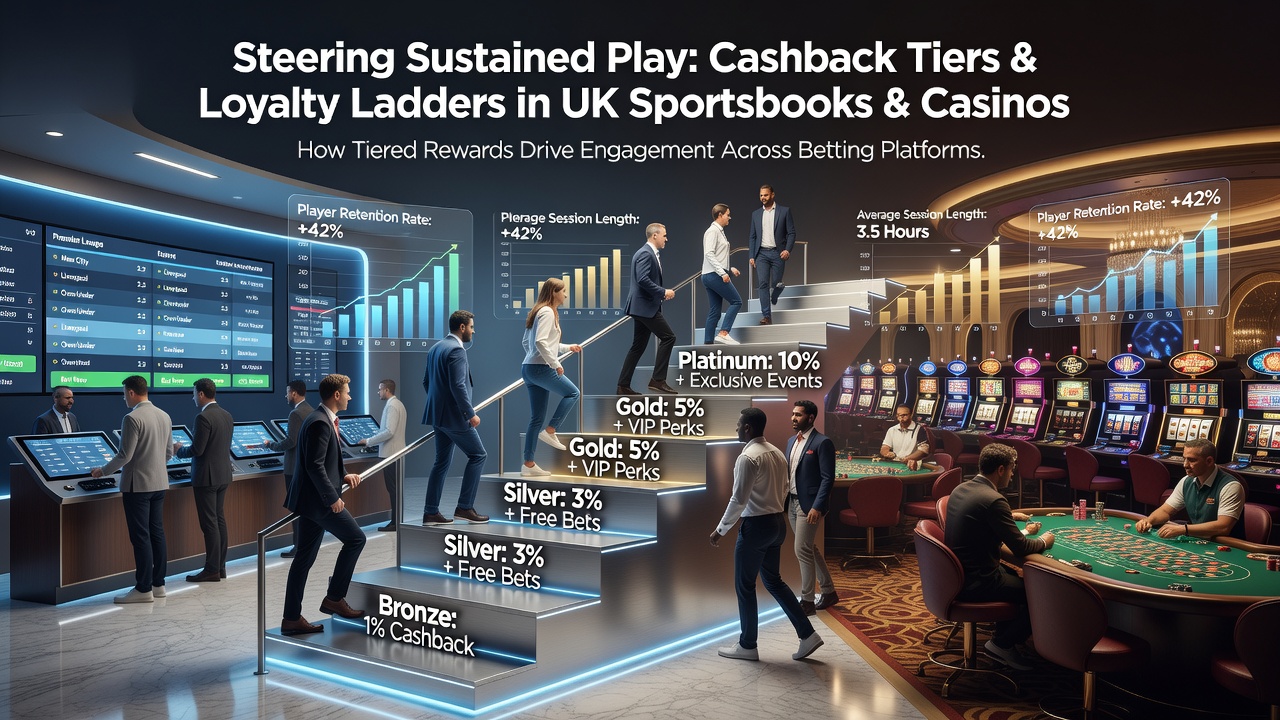
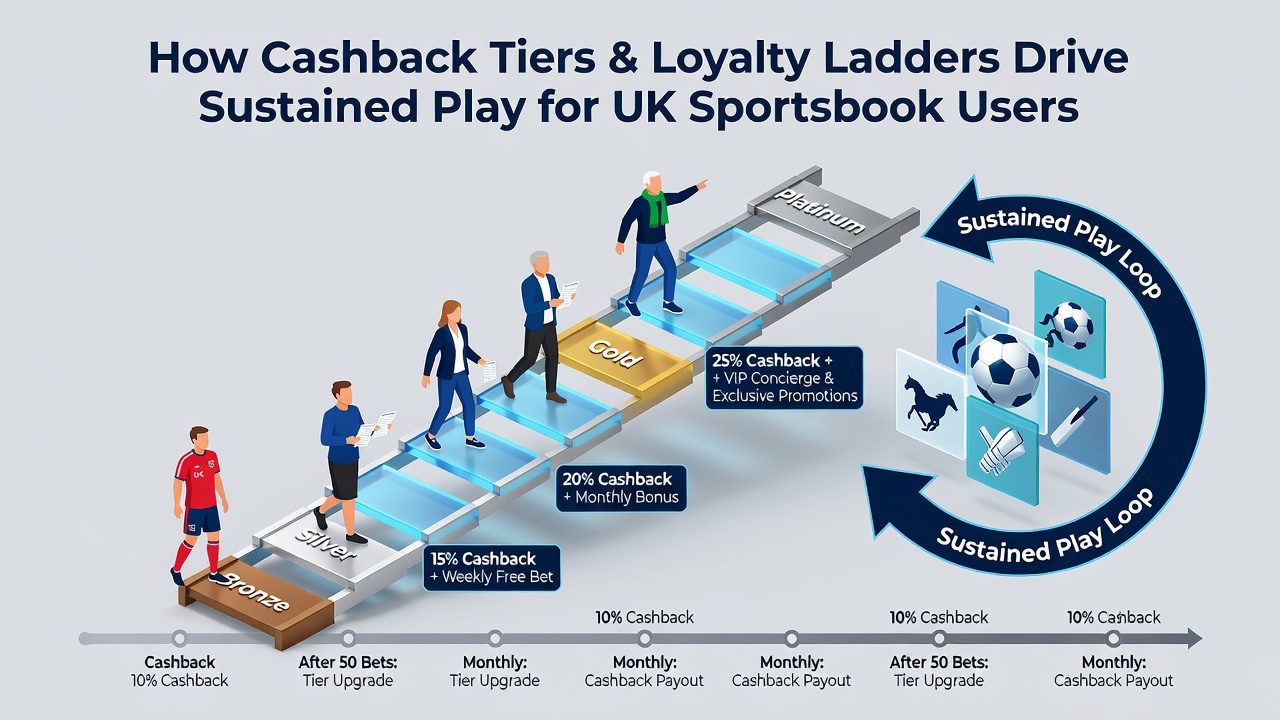
Data from industry analyses shows that cashback tiers function as percentage-based returns on net losses, with operators structuring these rewards across multiple levels that unlock higher rates as cumulative activity grows; players often begin at entry points offering 5 to 10 percent cashback while advancing to tiers that deliver 15 to 25 percent once spending thresholds are met, and this progression ties directly to sustained engagement because each completed cycle resets or elevates the baseline for future returns. Observers note that loyalty ladders operate alongside these cashback mechanisms by awarding points for every wager placed, whether on sports events or casino games, and those points accumulate to determine status within a hierarchy that grants additional perks such as faster withdrawals, exclusive events, and personalized cashback multipliers.
Mechanics Behind Tier Progression and Point Accumulation
Operators calculate points through standardized formulas that convert stake amounts into redeemable units, typically granting one point per pound wagered on sportsbooks and variable rates on casino floors depending on game type, while cashback itself activates on a weekly or monthly basis once net losses reach defined amounts; those who reach silver or gold tiers receive enhanced percentages applied retroactively to the qualifying period, and the structure encourages repeated sessions because the gap between tiers narrows with consistent play, turning what begins as occasional participation into habitual activity across both online platforms and physical venues. Research indicates that many programs incorporate time-limited challenges where extra points or instant cashback bonuses become available during peak periods, including major football fixtures or summer racing meets, and in August 2026 several major operators adjusted their ladders to include hybrid rewards that blend sports and casino activity into unified progress bars.
Player Behavior Patterns Across Different Platforms
Studies from organizations such as the Australian Gambling Research Centre reveal that tiered systems correlate with extended session lengths because participants monitor progress toward the next reward level in real time, prompting additional bets to secure incremental gains; on sportsbook interfaces this manifests through live dashboards that display remaining requirements for cashback upgrades, whereas casino floors use physical loyalty cards scanned at terminals to track equivalent metrics, and the result is a feedback loop where visible advancement sustains motivation even during losing streaks. Data from multiple European markets shows similar retention effects when loyalty ladders incorporate non-monetary incentives like status badges and priority support, which complement cashback by fulfilling psychological drivers beyond pure financial recovery.
Comparative Approaches in Sportsbooks Versus Casino Environments
Sportsbooks tend to emphasize cashback tied to specific event categories such as accumulator bets or in-play wagers, allowing operators to steer volume toward higher-margin products while loyalty ladders reward overall turnover regardless of outcome, and casino environments apply analogous tiers but often weight points more heavily toward slots and table games with built-in house edges that accelerate point accrual; this divergence means players who split time between both formats frequently maintain dual progress tracks that converge at higher tiers, creating cross-platform loyalty that operators reinforce through unified account systems. Figures from industry reports compiled by groups including the Canadian Centre for Gaming Research demonstrate that participants who achieve mid-tier status exhibit longer lifetime engagement spans compared with those remaining at base levels, because the sunk cost of accumulated points and the prospect of elevated cashback rates reduce the likelihood of switching to competing operators.
Seasonal Adjustments and Market Observations in 2026
During August 2026 operators introduced temporary ladder expansions that aligned with the start of new football seasons and continued summer festival circuits, adding interim tiers that granted accelerated cashback for a limited window before reverting to standard structures; these adjustments coincided with broader shifts in participation patterns documented across regulated markets, where loyalty mechanics helped maintain consistent activity levels even amid fluctuating economic conditions. External analyses from academic sources such as those published through university-affiliated gambling studies centers confirm that the combination of visible tier advancement and recurring cashback payouts functions as a retention tool that operates independently of initial welcome incentives, focusing instead on long-term behavioral steering through incremental reward scaling.
Conclusion
The integration of cashback tiers with loyalty ladders creates structured pathways that align operator objectives with measurable player metrics, resulting in documented increases in session frequency and cross-format participation throughout British betting environments; as operators refine these systems with data-driven thresholds and hybrid reward models, the underlying mechanics continue to shape how sustained play distributes across sportsbooks and casino floors without relying on one-time promotions.